Commercial Flooring for Retail
Durable, attractive flooring solutions for retail spaces. We work after hours to minimize disruption to your business.
What Retail Needs From Flooring
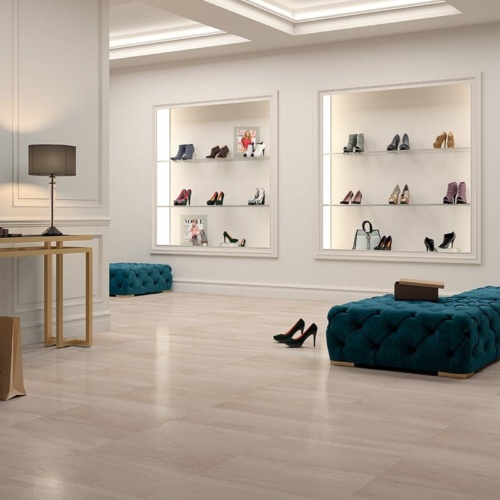
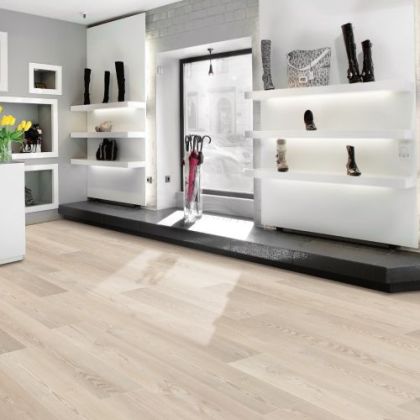
Retail flooring has one job that most other commercial floors don't: it has to sell. The floor is the largest surface in the store, and it directly affects how customers perceive the brand. A scuffed, worn, or mismatched floor undermines the merchandise on the shelves above it. At the same time, that floor is getting hammered by foot traffic, pallet jacks, fixture moves, and seasonal resets.
Retail spaces also cycle faster than most commercial environments. Store layouts change with seasons and promotions. Fixtures get moved and reset. New tenants take over old spaces. The flooring system needs to accommodate that kind of change without showing every scuff, drag mark, and patched section.
Then there's the installation reality: most retailers can't afford to close for days or weeks. Work has to happen at night, on weekends, or in phases that keep most of the store open while sections are blocked off. Any flooring plan that doesn't account for lost revenue during installation isn't a real plan.
Common Failure Modes We Prevent
- • Indentation from fixtures and displays: Heavy gondolas, display cases, and point-of-sale stations create permanent dents in flooring that isn't rated for static load. When fixtures move during resets, the damage is visible and unfixable.
- • Scuff trails from pallet jacks: Restocking with pallet jacks and hand trucks leaves black scuff marks on soft resilient flooring. Without a product rated for rolling loads, the sales floor develops visible traffic lanes.
- • Moisture-related adhesive failure: Big-box stores and ground-floor retail spaces with slab-on-grade concrete are prone to moisture vapor issues. Glue-down flooring installed without testing lifts and bubbles within months.
- • Entry zone degradation: The first several feet inside a retail entrance take the worst abuse — tracked-in grit, moisture, salt in winter. Without proper matting and a durable transition, this zone fails before the rest of the floor.
- • Color inconsistency from phased installs: Retail tenants often expand or reconfigure over time. New flooring that doesn't match the existing floor — different dye lots, different wear levels — creates a patchwork look that cheapens the space.
- • Subfloor telegraphing under thin goods: Thin LVT or sheet vinyl installed on rough concrete shows every crack, ridge, and patch line. Customers may not identify the problem, but the floor looks "off" — and that affects perception.
Recommended Systems by Zone
Sales Floor
The sales floor is the largest zone and the one customers spend the most time on. It needs to look sharp, handle fixture loads, resist scuffing, and clean up easily after high-traffic days.
- • Best fit: Commercial-grade LVT (glue-down for stability under fixtures) or polished concrete for a modern, industrial aesthetic. Porcelain tile works well in upscale boutiques and showrooms where design impact is the priority.
- • Avoid: Click-lock floating LVT on a sales floor — fixture loads and rolling traffic will cause plank movement and gapping over time.
Fitting Rooms
Fitting rooms are small, high-turnover spaces where customers are barefoot or in socks. The floor needs to feel clean, look good in tight quarters, and hold up to constant foot traffic in a confined area.
- • Best fit: LVT (easy to clean, comfortable underfoot) or carpet tile for apparel retailers that want a softer feel. Carpet tile also allows individual tile replacement when staining occurs.
- • Avoid: Broadloom carpet — it stains permanently in these spaces and can't be spot-replaced.
Stockroom
Stockrooms take the heaviest abuse in a retail operation: pallet jacks, hand trucks, dropped merchandise, and constant foot traffic in work boots. Aesthetics are secondary to durability and cleanability.
- • Best fit: Epoxy or polyaspartic coating (seamless, handles rolling loads, easy to clean) or polished concrete if the existing slab is in good shape.
- • Avoid: VCT in stockrooms — pallet jack wheels gouge and crack the tiles, and the wax finish gets destroyed immediately.
Entries & Vestibules
Entry zones are the transition from outside to inside. They catch rain, snow, mud, road salt, and grit from every customer's shoes. This zone protects the rest of the sales floor from premature wear.
- • Best fit: Recessed entry mat systems (aluminum frame with carpet or rubber inserts) backed by porcelain tile or sealed concrete. The mat captures debris; the hard surface behind it is easy to clean and slip-resistant when wet.
- • Avoid: Polished or smooth-finish flooring right at the door — it becomes a slip hazard in wet weather.
Back-of-House
Break rooms, offices, and employee corridors need functional flooring that cleans easily and handles moderate traffic. These areas don't need the design standard of the sales floor, but they shouldn't be ignored either.
- • Best fit: VCT (low cost, proven durability in employee areas) or basic sheet vinyl for break rooms where spills are common.
- • Avoid: Carpet in employee break rooms — food and beverage spills make it a maintenance headache.
Spec Checklist Before You Bid
Whether you're a retailer managing your own buildout or a GC bidding a tenant improvement, make sure these items are covered:
- • Moisture testing: ASTM F2170 testing on all concrete slabs, especially ground-floor retail and big-box spaces built slab-on-grade. If readings are elevated, include moisture mitigation in the scope.
- • Subfloor flatness: Specify required tolerances and include concrete prep and leveling as a line item. Retail slabs that have had multiple tenants often have patch marks, thin-set residue, and uneven sections.
- • Transitions: Map every transition point: sales floor to stockroom, sales floor to fitting rooms, entry to sales floor. Each needs a defined detail — flush, ramped, or T-molding — before installation starts.
- • Wall base: Specify wall base type and height for each zone. Rubber cove base is standard for back-of-house; sales floor base should match the design intent (painted wood, tile base, or color-matched rubber).
- • Slip resistance: Verify slip-resistance ratings for entry zones and any areas exposed to water (restrooms, food service if applicable). Check local code requirements and ADA guidelines.
- • Rolling load and static load ratings: The sales floor needs to handle both fixture weight (static) and pallet jack traffic (rolling). Verify the specified product is rated for both. This is one of the most common overlooked specs in retail projects.
- • Cleaning chemical compatibility: Retail cleaning crews often use whatever is available. Confirm the flooring manufacturer's warranty covers the cleaning products your team will actually use.
Downtime and Phasing Plan
Retail flooring installations almost always happen while the store remains at least partially open. The standard approach is after-hours work — crews arrive after closing and work through the night, with the space cleaned and ready for customers by opening. For larger projects, zones of the store are blocked off with temporary barriers and the work progresses section by section over days or weeks.
Dust control is essential. Flooring removal and concrete grinding produce fine dust that settles on merchandise, fixtures, and HVAC systems. A responsible installer uses dust containment barriers, negative air machines, and HEPA-filtered equipment. Skipping this step in a retail environment means damaged inventory and a dusty store at opening.
For multi-location rollouts (chain retailers, franchises), a phased schedule across stores is critical. Each location needs its own site assessment and phasing plan — what works in one store may not work in another due to slab conditions, layout, and lease constraints. The installer should provide a per-location timeline with clear milestones and escalation paths for delays.
Maintenance Reality Check
Retail flooring maintenance needs to be realistic about who's actually doing the cleaning. In most stores, it's the staff with a dust mop and an auto-scrubber, not a dedicated janitorial crew. The maintenance plan has to match that reality.
- • LVT on the sales floor: Daily dust mopping, periodic auto-scrubbing. Most commercial LVT has a factory urethane finish that doesn't require waxing. High-traffic areas near entries and checkout may need periodic recoating depending on the manufacturer's recommendations.
- • Polished concrete: Daily dust mopping, periodic damp mopping with a neutral cleaner. Polished concrete needs a densifier/guard reapplication on a schedule that depends on traffic volume. It's low-maintenance but not no-maintenance.
- • VCT in back-of-house: Requires regular stripping and waxing — typically several times a year in active areas. If the store's maintenance team won't commit to that schedule, VCT will look neglected fast. Consider LVT or sheet vinyl as lower-maintenance alternatives.
- • Carpet tile in fitting rooms: Daily vacuuming, spot cleaning as needed, interim extraction quarterly. Keep replacement tiles from the same dye lot on hand — fitting rooms see concentrated traffic that wears individual tiles faster than the rest of the store.
- • Epoxy in stockrooms: Sweep and scrub as needed. Epoxy is forgiving in terms of daily maintenance, but the topcoat will wear down under pallet jack traffic and may need recoating periodically.
Cost Drivers
What pushes retail flooring projects above baseline estimates:
- • After-hours labor: Night and weekend crews carry a premium over standard daytime rates. For most retail projects, this is unavoidable — the alternative is closing the store.
- • Fixture moving and resetting: If gondolas, display cases, and shelving need to be moved and reset as the floor is installed in phases, that labor adds up. Coordinate with your visual merchandising team to combine fixture resets with flooring phases where possible.
- • Demolition of existing flooring: Retail spaces with multiple previous tenants often have layers of flooring — tile over VCT over adhesive residue. Removing that buildup takes time and adds to disposal costs.
- • Subfloor remediation: Multi-tenant slabs are often uneven, patched, and scarred from previous installations. Leveling, grinding, and skim-coating to meet flatness requirements is a significant line item.
- • Moisture mitigation: Ground-floor and slab-on-grade retail spaces frequently test high for moisture vapor. Mitigation coatings add cost but prevent far more expensive failures down the road.
- • Dust containment in occupied stores: Barriers, negative air machines, and HEPA equipment protect inventory and customers but add to the project cost.
- • Multi-store rollouts: Each location needs its own site assessment, potentially different subfloor prep, and individual phasing. Economies of scale help with material pricing, but logistics and labor are per-store costs.
FAQs
Can retail flooring be installed without closing the store?
Yes. Most retail flooring projects are done after hours or in sections while the rest of the store stays open. The installer sets up temporary barriers to separate the work zone from the active shopping area. With proper planning, customers rarely notice ongoing work — they just see a refreshed section when the barriers come down.
What's the best flooring for a retail sales floor?
It depends on the retail category and design intent. LVT is the most common choice across retail — it's durable, attractive, and available in a wide range of visuals. Polished concrete works well for stores going for a modern, industrial look. Porcelain tile suits luxury retailers and showrooms where the floor is part of the brand statement.
How do you handle flooring around heavy fixtures and displays?
For new installations, we install the flooring wall-to-wall before fixtures go back in — this gives the cleanest result and avoids cutting around furniture legs. When fixtures can't be moved (permanently anchored displays, for example), we cut tight to the base and use appropriate trim. The key is coordinating with the store's visual merchandising schedule so fixture moves happen once, not twice.
Is polished concrete a good option for retail?
Polished concrete works well for certain retail environments — home goods, sporting goods, warehouse-style retailers, and modern boutiques. It's extremely durable, low-maintenance, and cost-effective when the existing slab is in decent condition. It's less suitable for stores where acoustics matter (it's hard and reflective) or where the brand requires a warmer, wood-like aesthetic.
Do we need moisture testing for a second-floor retail space?
Elevated slabs (above grade) are less likely to have moisture issues than ground-floor slabs, but they're not immune. Spills, plumbing leaks from adjacent spaces, and humidity can all affect the slab. Most flooring manufacturers require moisture testing regardless of floor level to honor their warranty. It's a small cost that prevents a large problem.
How do you match new flooring to existing sections when expanding?
Matching is possible but requires planning. If the original flooring product is still available, ordering from the same manufacturer is a start — but dye lots vary, and the existing floor will have worn differently than the new material. In many cases, a deliberate design break (a transition strip, a change in plank direction, or a complementary but different material) looks better than an imperfect match.
Related
Resources
Flooring Types
Services
Case Studies
Ready to Update Your Retail Flooring?
Contact us for a free site walk and detailed proposal for your retail project.
Request a Quote