Commercial Flooring for Gyms & Fitness Facilities
Flooring systems engineered for impact, sweat, heavy equipment, and the relentless foot traffic of a working gym. We install floors that protect your subfloor, your members, and your investment.
What Gyms & Fitness Facilities Need From Flooring
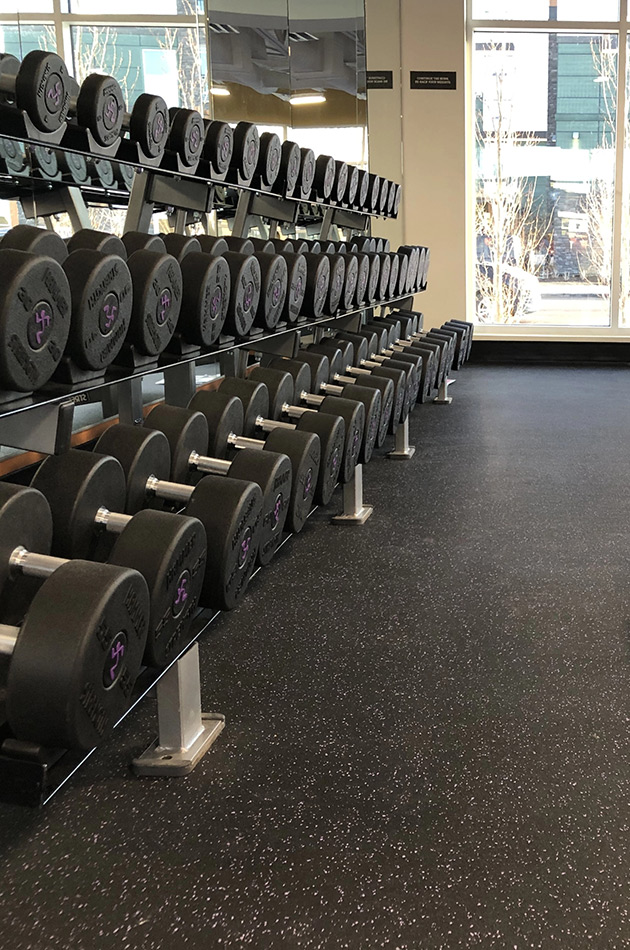
A gym floor takes punishment that most commercial spaces never see. Dropped dumbbells, dragged sleds, sweat puddles, rubber-soled shoes grinding through thousands of reps per day — the flooring has to absorb all of it without cracking, delaminating, or becoming a liability.
Beyond durability, fitness facilities need slip resistance that works when floors are wet, shock absorption that protects joints and subfloor structures, and acoustics that keep impact noise from traveling between floors or into adjacent spaces. A yoga studio has different needs than a free-weight area, and the locker room has different needs than the front desk. One flooring type rarely covers the whole building.
Most gym owners and facility managers we work with have already learned this the hard way — they're replacing a floor that failed too early because the wrong product was specified for the zone. Our job is to match the right system to each space so the floor lasts the full lifecycle without surprise repairs.
Common Failure Modes We Prevent
- • Rubber tile displacement: Interlocking rubber tiles shift and gap under heavy equipment, creating trip hazards and trapping debris in seams.
- • Subfloor damage from impact: Dropped weights crack concrete underneath thin or improperly specified flooring, leading to costly structural repairs.
- • Moisture-driven delamination in wet areas: Locker rooms and pool-adjacent spaces develop adhesive failure when moisture vapor isn't addressed before installation.
- • Odor and bacteria retention: Porous surfaces or poorly sealed seams trap sweat and cleaning solution residue, creating persistent hygiene issues.
- • Premature wear from equipment drag: Sliding benches, racks, and sleds destroy surface finishes on floors not rated for that kind of abrasion.
- • Acoustic bleed between floors: Impact noise from weights transmits through the structure into spaces below, especially in mixed-use buildings.
- • Slip incidents on wet surfaces: Smooth finishes near water fountains, entries, and locker rooms become dangerous when wet if slip resistance isn't part of the spec.
Recommended Systems by Zone
Every zone in a fitness facility has a different abuse profile. Here's what we typically recommend and why.
Weight Room / Free-Weight Area
This is the highest-impact zone in the building. Flooring needs to absorb dropped loads, resist indentation from heavy racks, and survive constant abrasion from knurled bars and metal plates.
- • Best fit: Rubber flooring — vulcanized rolled rubber or high-density rubber tile, 8mm+ thickness. Glue-down installations outperform loose-lay in this zone.
- • Also works: Platform systems with rubber over plywood for Olympic lifting areas.
- • Avoid: LVT, carpet tile, or any surface-finished product — impact damage will void warranties and destroy the floor within months.
Cardio Area
Treadmills, bikes, and ellipticals generate vibration and static point loads from machine feet. The floor also needs to handle sweat and frequent cleaning without degrading.
- • Best fit: Rubber flooring — rolled rubber at 6mm+ provides vibration dampening and easy maintenance.
- • Also works: LVT/LVP in lighter-use cardio zones where aesthetics matter more (boutique studios, cycling rooms).
- • Avoid: Carpet tile — it traps sweat, develops odor, and wears unevenly under machine feet.
Group Fitness Studios
Studios host everything from yoga to HIIT classes. The floor needs to be comfortable underfoot for barefoot activities but durable enough for high-impact movements and equipment like kettlebells and battle ropes.
- • Best fit: Rubber with a smooth surface finish for multi-purpose studios; sprung subflooring for dance-focused spaces.
- • Also works: LVT in yoga or Pilates-only studios where impact loads are minimal.
- • Avoid: Hardwood in multi-purpose studios — it can't handle dropped weights and is expensive to refinish.
Locker Rooms & Showers
Constant moisture, bare feet, and heavy cleaning chemicals define this zone. The flooring must be waterproof, slip-resistant when wet, and impervious to mold and mildew.
- • Best fit: Porcelain tile with appropriate slip-rated finish and epoxy grout for wet areas.
- • Also works: Sheet vinyl — fewer seams mean fewer moisture entry points compared to tile.
- • Avoid: Rubber and carpet tile — rubber gets slippery when wet, and carpet retains moisture and odor.
Corridors & Common Areas
Hallways, reception areas, and juice bars see constant foot traffic and need to project a clean, professional image while being easy to maintain.
- • Best fit: LVT/LVP — wide design range, durable wear layer, easy to clean and replace individual planks if damaged.
- • Also works: Polished concrete in industrial-aesthetic facilities.
- • Avoid: Carpet — tracks dirt, absorbs spills, and wears out fast in high-traffic lanes.
Entries & Vestibules
Entries handle the worst combination: outdoor debris, rain and snow tracked in, and heavy foot traffic. They also set the first impression for members and guests.
- • Best fit: Porcelain tile or LVT with recessed walk-off mats to capture moisture and grit before it reaches interior floors.
- • Avoid: Rubber at entries — it shows dirt easily and can get slippery when wet without a textured surface.
Spec Checklist Before You Bid
Getting these details right before the project starts prevents change orders, delays, and premature failures.
- • Moisture testing: Calcium chloride and relative humidity tests on concrete slabs, especially in below-grade or slab-on-grade spaces. Elevated readings require moisture mitigation before any flooring goes down.
- • Subfloor flatness: Measure F-numbers or check with a 10-foot straightedge. Rubber and LVT both telegraph subfloor imperfections. Budget for concrete prep and leveling if the slab is out of spec.
- • Transitions between zones: Plan transition strips where flooring types change — rubber to LVT, tile to rubber. Height differences create trip hazards if not detailed in advance.
- • Wall base: Rubber wall base is standard in gyms, but locker rooms and wet areas may need cove base with sealed transitions to prevent water intrusion behind the wall.
- • Slip resistance: Verify that specified products meet slip-resistance requirements for each zone, especially wet areas. Request coefficient of friction (COF) data from manufacturers.
- • Rolling and static loads: Document the heaviest equipment that will sit on or roll across each zone. Weight racks, loaded sleds, and cleaning machines all affect product selection.
- • Cleaning chemical compatibility: Gyms use aggressive disinfectants. Confirm that the flooring manufacturer approves the specific chemicals your janitorial team uses — some cleaners damage rubber surfaces or strip LVT finishes.
Downtime and Phasing Plan
Most gyms can't shut down entirely for a flooring project — members expect access, and revenue stops when the doors close. We phase projects zone by zone so the facility stays partially operational throughout the work. Weight rooms and studios are typically isolated first, while cardio and common areas stay open. Then the schedule flips.
After-hours and weekend installation is common for gyms in mixed-use buildings or 24-hour facilities. We coordinate start and stop times around peak membership hours and provide dust barriers, temporary walkways, and signage to keep members safe in adjacent areas.
Adhesive cure times drive the schedule more than the installation itself. Rubber adhesive typically needs overnight cure before the floor can take foot traffic, and full-cure before heavy equipment is placed. We account for this in every phasing plan so equipment gets moved back on schedule — not on top of a floor that hasn't set.
Maintenance Reality Check
Rubber floors are low-maintenance but not no-maintenance. Daily dust mopping removes grit that acts like sandpaper under heavy foot traffic. Damp mopping with a pH-neutral cleaner keeps the surface hygienic without degrading the rubber. Avoid oil-based or solvent-based cleaners — they break down the material over time. Periodically, a deep scrub with an auto-scrubber restores the surface.
LVT in corridors and common areas holds up well with regular damp mopping. Most commercial LVT has a factory-applied urethane finish that eliminates the need for wax or polish, but high-traffic lanes may benefit from periodic recoating to extend the wear layer's life.
Tile in locker rooms requires grout maintenance. Even epoxy grout can discolor if cleaning schedules lapse. The key is consistent cleaning with products approved for both the tile and grout — and resealing cementitious grout on a regular schedule if that's what was installed.
Cost Drivers
Understanding what pushes costs up or down helps you budget realistically and avoid surprises.
- • Rubber thickness: Thicker rubber (8mm vs. 6mm) costs more per square foot but may be required in weight areas to protect the subfloor. Skimping here often means replacing both the floor and the concrete underneath later.
- • Subfloor condition: Cracked, uneven, or moisture-compromised slabs require prep work — grinding, patching, leveling compound, or moisture mitigation — before any flooring can be installed.
- • Number of zones and transitions: More flooring types means more transition details, more material handling, and more labor to cut and fit different products at boundaries.
- • Equipment moving: Disconnecting, moving, and reconnecting heavy gym equipment adds labor and time. Some specialty machines require certified technicians to move safely.
- • Phased scheduling: Working in occupied facilities with after-hours crews costs more than a single-phase empty-building install. The tradeoff is keeping revenue flowing during the project.
- • Demolition and disposal: Removing existing flooring — especially glued-down rubber or old VCT with adhesive residue — adds time, labor, and disposal costs.
- • Acoustic underlayment: Gyms in mixed-use buildings or above occupied spaces may need sound-dampening underlayments or isolation systems to meet noise requirements.
FAQs
How thick should rubber flooring be in a weight room?
For areas where weights are dropped — deadlifts, Olympic lifts, heavy dumbbell work — 8mm is the minimum thickness we recommend for glue-down rubber. Some facilities use dual-layer systems or platform builds with 12mm+ in dedicated lifting zones. The subfloor condition and the type of lifting activity drive the right spec.
Can LVT handle gym traffic?
In corridors, reception areas, and light-use studios, yes — commercial-grade LVT with a 20+ mil wear layer holds up well. In weight rooms or high-impact zones, no. LVT isn't designed for dropped loads or heavy point pressure from racks and machines.
Should we glue down rubber tiles or use interlocking?
Glue-down is more stable and better for high-traffic commercial gyms. Interlocking tiles can shift under heavy equipment, separate at seams, and create trip points. Loose-lay interlocking tiles work for temporary setups or home gyms, but commercial fitness facilities get better long-term performance from adhered installations.
How long does a gym flooring installation take?
It depends on the size of the facility, how many zones require different flooring types, and whether subfloor prep is needed. A single-zone rubber install in a weight room might take a few days. A full-facility project with multiple flooring types, phased around operations, typically runs two to four weeks. We provide a detailed schedule during the proposal phase.
What about moisture in slab-on-grade gyms?
Slab-on-grade construction is common in standalone fitness buildings and strip-mall conversions. These slabs often have elevated moisture vapor emissions that will destroy adhesive bonds over time. We test every slab before installation and recommend moisture mitigation systems when readings exceed manufacturer thresholds.
Do you handle equipment moving during the project?
We coordinate equipment relocation as part of the phasing plan. For standard gym equipment — benches, dumbbells, cable machines — our crew handles the move. Specialty machines (treadmills with integrated screens, Pilates reformers, etc.) sometimes require the equipment vendor's technicians for disconnection and reconnection. We build all of this into the project timeline.
Related
Resources
Flooring Types
Services
Case Studies
Ready to Update Your Fitness Facility Flooring?
Contact us for a free site walk and detailed proposal for your gym or fitness facility project.
Request a Quote