Flooring for Golf Courses & Banquet Halls
Flooring that elevates guest experience and stands up to heavy event traffic. We balance aesthetics, durability, and practical maintenance for clubhouses, ballrooms, and event venues.
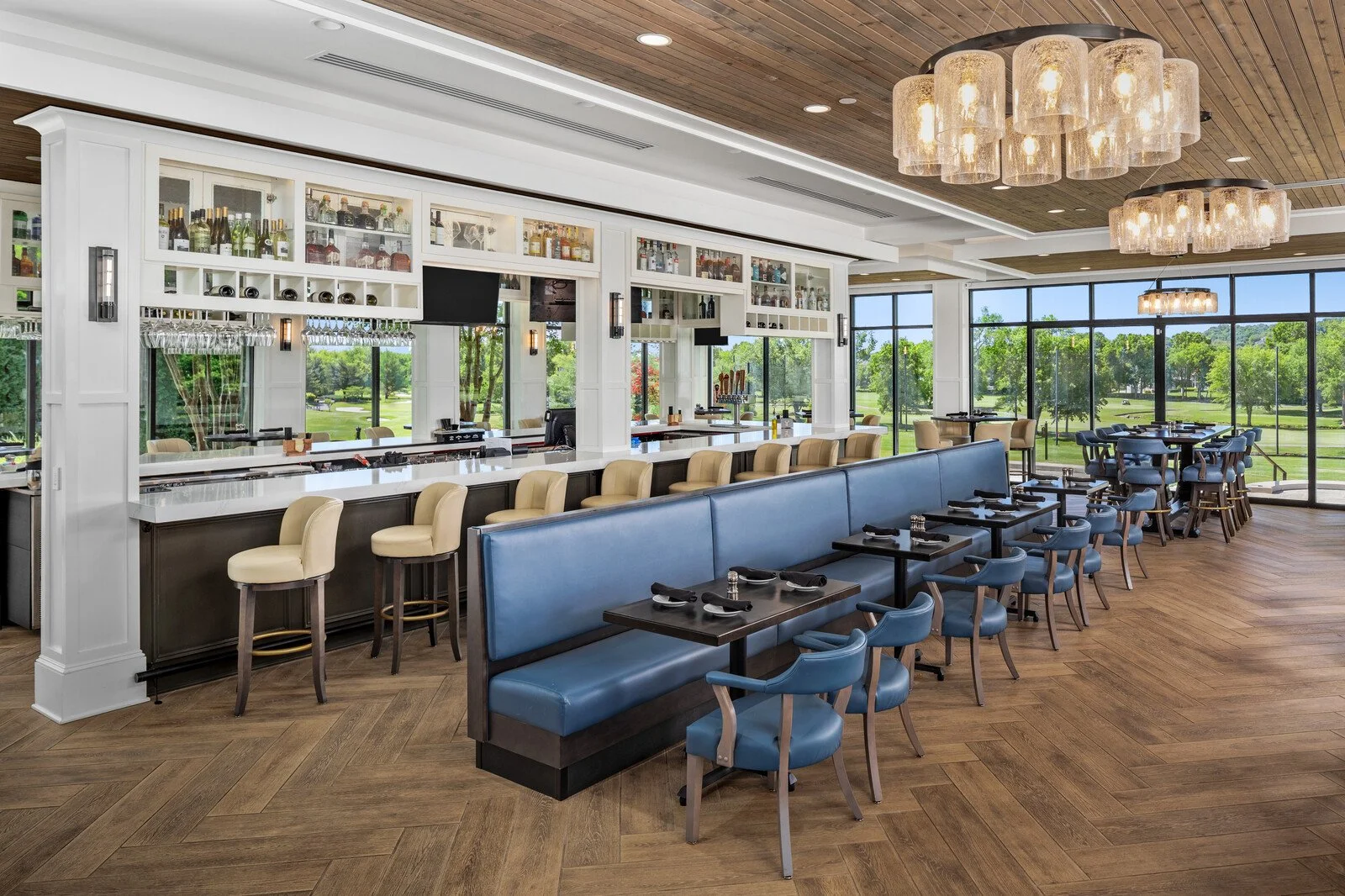
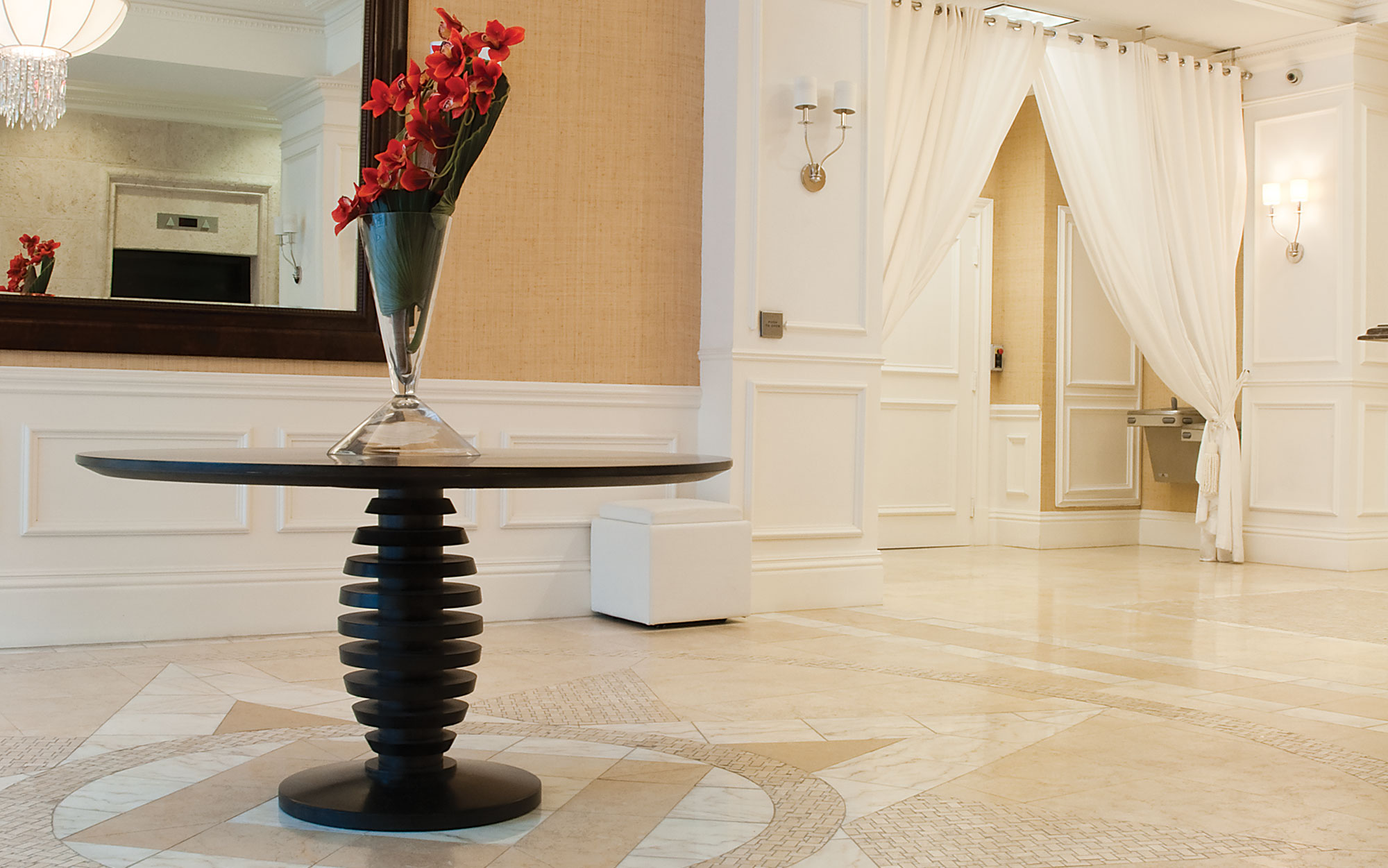
What Golf Courses & Banquet Halls Need From Flooring
Clubhouses and event venues operate in a constant tension between appearance and abuse. The flooring needs to look refined enough for weddings, galas, and member dining — and then survive the setup, teardown, and cleanup that comes with running events every weekend. Tables and chairs get dragged. Carts roll through. Spills happen during service, not after.
The building itself creates challenges. Many clubhouses are older structures with concrete slabs that have seen decades of moisture exposure. Entries bring in grass, dirt, and moisture from the course. Kitchens and bars put food and beverage at constant contact with the floor. Each zone has a different performance requirement, and the flooring has to transition seamlessly between all of them while maintaining a cohesive design.
Operators care about lifecycle cost, not just install price. A floor that looks great for two years but needs replacement before year five costs more than a better-specified floor that lasts ten. We help venue managers spec materials that match the actual demands of their operation — not just the vision board from the architect.
Common Failure Modes We Prevent
- • Chair and table leg damage: Repeated dragging of banquet furniture gouges LVT and scratches hardwood. Product selection and furniture glide specs matter.
- • Carpet tile crushing in event spaces: Heavy round tables and stacked chairs create permanent indentations in low-density carpet tile, making the floor look worn within a year.
- • Moisture damage at entries: Golfers tracking in water and turf debris cause adhesive failure and edge curling in flooring near exterior doors.
- • Staining in food and beverage zones: Red wine, cooking grease, and acidic cleaners damage surfaces that aren't rated for food-service environments.
- • Grout failure in restrooms and kitchen areas: Standard cementitious grout cracks and stains under the moisture and chemical load of commercial kitchens and high-use restrooms.
- • Rolling load damage from carts and AV equipment: Service carts, staging platforms, and portable bars stress flooring joints and seams as they move through the venue.
- • Acoustic complaints in ballrooms: Hard surfaces amplify noise in large open rooms, making it difficult for guests to hold conversations during events.
Recommended Systems by Zone
Clubhouses and event venues have distinct zones that each demand different flooring performance. Here's what we recommend based on the actual conditions each space faces.
Ballroom / Event Space
The ballroom is the revenue center. It needs to look upscale, handle constant furniture setup and teardown, support dancing, and clean up fast between events. Acoustic performance matters in large open rooms.
- • Best fit: Carpet tile — high-density, solution-dyed nylon with a commercial backing. Provides acoustic absorption, comfort underfoot for events, and allows individual tile replacement when damaged.
- • Also works: LVT/LVP in venues that prefer a wood or stone aesthetic. Choose a product with a thick wear layer and high rolling-load rating.
- • Avoid: Broadloom carpet — it can't be spot-repaired, stains are permanent, and replacement means the entire room goes offline.
Dining Area
Dining rooms see food and beverage spills daily. The floor needs to be easy to clean between seatings, resist staining, and maintain a polished look that matches the venue's aesthetic.
- • Best fit: LVT/LVP — wood-look planks or stone-look tiles provide the upscale appearance with easy maintenance. Spills wipe up without staining.
- • Also works: Engineered hardwood in upscale dining rooms where the budget supports it and chair glides are required on all furniture.
- • Avoid: Carpet in dining — food and wine stains are inevitable and expensive to remediate.
Bar Area
Bars take a beating from spilled drinks, dropped glassware, bar stool wear, and foot traffic concentrated in a small area. The floor also needs to handle the moisture from ice bins and bar sinks.
- • Best fit: LVT/LVP — waterproof, stain-resistant, and available in designs that coordinate with the dining room.
- • Also works: Porcelain tile behind the bar and in the well area where standing water is common.
- • Avoid: Hardwood — standing moisture warps it, and bar-stool legs wear through the finish fast.
Pro Shop
Pro shops are retail spaces that need to merchandise well. Foot traffic is moderate, but the floor sees golf shoes with soft spikes and occasional wheeled displays or carts.
- • Best fit: LVT/LVP — durable, good-looking, and easy to maintain in a retail setting.
- • Also works: Carpet tile for a softer, quieter feel that's easy to replace in sections.
- • Avoid: Polished concrete or untextured tile — they can be slippery with soft-spike golf shoes and feel cold for a retail environment.
Corridors & Lobbies
These are the highest-traffic transition zones in the building. The flooring sets the design tone for the entire venue and needs to handle wheeled carts, foot traffic, and frequent cleaning.
- • Best fit: LVT/LVP — handles rolling loads, high foot traffic, and cleans easily. A wide range of visuals lets it coordinate with adjacent spaces.
- • Also works: Porcelain tile in lobbies where a more formal or monumental look is desired.
- • Avoid: Carpet in corridors — it wears unevenly in traffic lanes and shows paths quickly in lighter colors.
Entries & Vestibules
Golfers walk in from the course with grass, sand, and moisture on their shoes. The entry zone takes the worst of it and protects every floor downstream. A proper walk-off system is essential.
- • Best fit: Porcelain tile with a textured slip-resistant finish, paired with recessed walk-off mats to capture debris and moisture.
- • Also works: LVT rated for wet conditions with adequate walk-off matting in front.
- • Avoid: Carpet or engineered hardwood at entries — moisture and grit will destroy them quickly.
Restrooms
Restrooms in event venues see heavier traffic than typical commercial restrooms — especially during events when hundreds of guests cycle through. The floor must be waterproof, easy to sanitize, and slip-resistant.
- • Best fit: Porcelain tile with epoxy grout — fully waterproof, easy to clean with commercial chemicals, and maintains appearance under heavy use.
- • Also works: Sheet vinyl — minimal seams reduce moisture entry points and simplify cleaning.
- • Avoid: LVT in plank format in restrooms — seams between planks can allow water penetration over time. If LVT is used, sheet-format or large-format tiles with welded seams are better options.
Spec Checklist Before You Bid
Getting these details documented before the project starts avoids budget surprises and schedule delays.
- • Moisture testing: Many clubhouse slabs are decades old. Calcium chloride and relative humidity testing are essential — especially in below-grade areas and spaces adjacent to exterior doors where irrigation water may wick through. Elevated readings require moisture mitigation before installation.
- • Subfloor flatness: Older buildings often have settled or uneven slabs. LVT and carpet tile both telegraph subfloor irregularities. Budget for concrete prep and leveling if the slab is out of tolerance.
- • Transitions between zones: Plan transition details where flooring types change — carpet tile to LVT at the ballroom threshold, tile to LVT at restroom entries. Height differences and material changes need proper trim profiles to avoid trip hazards and maintain a finished look.
- • Wall base: Match the wall base material and profile to each zone. Cove base in restrooms and kitchen-adjacent areas prevents water intrusion behind the wall. Standard rubber wall base works in corridors and event spaces.
- • Slip resistance: Verify that specified products meet slip-resistance requirements for each zone. Entries, restrooms, bar areas, and kitchen-adjacent zones all need products with documented wet COF performance.
- • Rolling loads: Service carts, AV equipment, portable staging, and bar carts all roll across the floor during setup and teardown. LVT and carpet tile specs need to accommodate these loads without seam damage or tile displacement.
- • Cleaning chemical compatibility: Event venues use commercial sanitizers and degreasers, especially in food-service areas. Confirm the flooring manufacturer approves the specific products your cleaning crew uses — some chemicals discolor or degrade certain surfaces.
Downtime and Phasing Plan
Event venues have calendars booked months in advance. A flooring project has to work around the event schedule, not the other way around. We start by reviewing the booking calendar and identifying windows — typically the off-season for golf courses, or midweek gaps between events for banquet halls. Larger projects are phased so that one section of the building remains operational while another is under construction.
After-hours installation is common when the venue can't fully close. We set up dust barriers and temporary walkways to isolate work areas from guest-accessible spaces. Noise-producing work like demolition and grinding is scheduled during hours when the building is empty. Finish installation — laying carpet tile or LVT — produces less noise and can happen closer to operational hours.
Adhesive cure times affect scheduling. Carpet tile adhesive is typically walkable within hours, which helps with fast turnarounds. LVT adhesive may need overnight cure before foot traffic and longer before rolling loads. We factor cure schedules into every phasing plan so the floor is ready before the next event setup begins.
Maintenance Reality Check
Carpet tile in ballrooms and event spaces needs regular vacuuming — ideally daily — to prevent grit from working into the fiber and accelerating wear. Spot-cleaning spills immediately prevents permanent staining, especially with wine, sauces, and oils. Periodic hot-water extraction keeps the carpet looking fresh and extends its useful life. Keep spare tiles from the same dye lot on hand so replacements are seamless.
LVT in dining, bar, and corridor areas is straightforward: dust mop daily, damp mop with a manufacturer-approved cleaner, and avoid wax-based products on no-wax finishes. High-traffic areas may benefit from periodic recoating with a compatible finish to refresh the wear layer. Address scratches from furniture legs by requiring felt or nylon glides on all chairs and tables.
Tile in restrooms and entries is durable but grout demands attention. Clean grout lines regularly to prevent discoloration. Epoxy grout resists staining better than cementitious grout but costs more upfront — it's worth it in high-use restrooms. Resealing cementitious grout on a regular schedule prevents moisture from penetrating and causing subfloor issues.
Cost Drivers
These are the factors that most commonly affect project budgets for clubhouses and event venues.
- • Number of flooring types: Venues that use carpet tile in the ballroom, LVT in corridors, tile in restrooms, and a different material in the bar area have more transitions, more material handling, and higher labor costs than single-product projects.
- • Subfloor condition: Older clubhouses frequently need slab repair, leveling compound, or moisture mitigation. These aren't optional — they're what prevents premature failure of the new floor.
- • Event-driven scheduling: Working around a packed event calendar means phased installations, after-hours crews, and potentially longer project timelines — all of which add cost compared to an empty-building install.
- • Demolition scope: Removing existing flooring in a venue — especially old carpet with stubborn adhesive or layered flooring systems — adds labor, time, and disposal costs.
- • Design coordination: Custom patterns, borders, inlays, or color-matched transitions increase material waste and installation labor. Simple layouts are faster and more cost-effective.
- • Furniture and fixture moving: Banquet halls full of tables, chairs, staging equipment, and AV gear all need to be moved and stored during installation, then moved back. Some venues handle this internally; others need it included in the project scope.
- • Acoustic requirements: If the ballroom or dining area needs sound attenuation, underlayments or higher-density carpet tile add to material costs but improve the guest experience significantly.
FAQs
Is carpet tile or LVT better for a banquet hall?
It depends on the venue's priorities. Carpet tile provides better acoustic comfort and a warmer feel underfoot — both advantages for large event spaces. LVT is easier to clean and more resistant to food and beverage stains. Some venues split the difference: carpet tile in the main event area and LVT in the pre-function space and corridors.
How do you protect new floors from banquet furniture damage?
Flooring selection is the first line of defense — we specify products rated for the static and rolling loads that event furniture creates. Beyond that, requiring felt or nylon glides on all chair and table legs is essential. Wheeled carts should have non-marking rubber casters. These aren't suggestions — they're conditions of maintaining the flooring warranty.
Can you install flooring during event season?
Yes, but it requires careful phasing. We work with the venue's event calendar to identify installation windows, isolate work areas from guest spaces, and schedule noisy work during unoccupied hours. Midweek installations between weekend events are common. The project timeline may be longer, but operations stay running.
What flooring works best near the clubhouse entrance?
Porcelain tile with a textured finish handles moisture, dirt, and grass tracked in from the course. Pair it with a recessed walk-off mat system — a few feet of walk-off matting traps most debris before it reaches interior floors. The walk-off zone is one of the most important details in a clubhouse floor plan.
How long does clubhouse flooring typically last?
With proper product selection, installation, and maintenance, commercial LVT and carpet tile in a clubhouse should last well beyond a decade. Porcelain tile in entries and restrooms can last even longer. Actual lifespan depends heavily on foot traffic volume, maintenance consistency, and whether the subfloor prep was done correctly at the outset.
Do older clubhouse slabs usually need moisture mitigation?
Frequently, yes. Many clubhouses were built decades ago, sometimes without modern vapor barriers under the slab. Golf courses have irrigation systems that keep surrounding soil wet, which drives moisture vapor through the concrete. We test every slab and recommend moisture mitigation when readings exceed the flooring manufacturer's installation thresholds.
Related
Resources
- • Commercial Flooring Types Explained
- • LVT vs. Carpet Tile
- • Planning a Flooring Replacement in an Occupied Building
Flooring Types
Services
Case Studies
Ready to Upgrade Your Venue?
Contact us for a free site walk and detailed proposal for your golf course or banquet hall project.
Request a Quote