Commercial Flooring for Education
Durable, easy-to-maintain flooring solutions for schools and universities. We work around class schedules to minimize disruption.
What Education Needs From Flooring
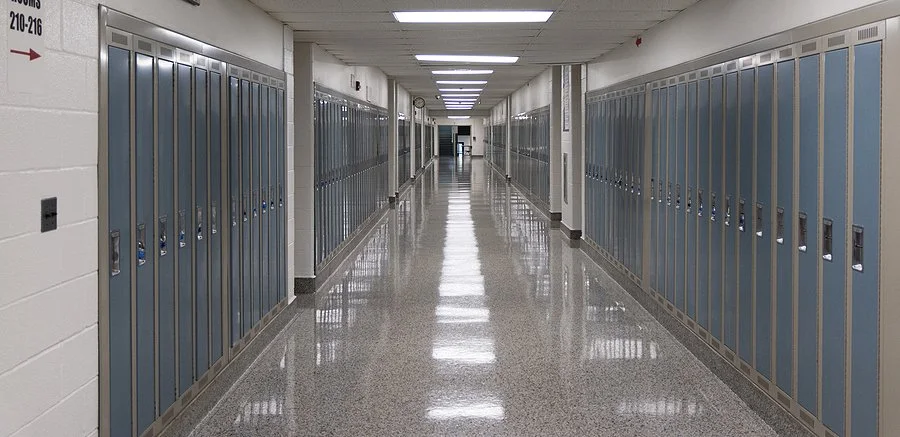
Schools put flooring through a level of abuse that most commercial spaces don't come close to. Hundreds or thousands of students moving through corridors at the same time, chairs scraping across classrooms all day, cafeteria spills, gym equipment, and custodial crews that need floors they can clean fast with basic equipment. The flooring has to take all of that and still look presentable for years.
Budget is almost always the constraint. School districts and universities are working with public funds and multi-year capital plans. That means the flooring decision isn't just about installed cost — it's about total lifecycle cost, including maintenance labor and material replacement intervals. A cheaper product that needs stripping and waxing every quarter isn't actually cheaper.
The other reality is scheduling. Most education flooring work happens during summer break, holiday breaks, or after school hours. That creates compressed timelines and hard deadlines — if the flooring isn't done before students return, you have a serious problem. Installation planning matters as much as product selection.
Common Failure Modes We Prevent
- • VCT wax buildup and yellowing: VCT that's been waxed for years without proper stripping develops thick, uneven buildup that yellows and traps dirt. The floor looks permanently dingy no matter how much wax is applied on top. We see this in almost every school renovation.
- • Carpet tile delamination in high-traffic corridors: Carpet tile placed in main corridors — where it shouldn't be — delaminates at the edges as thousands of feet scuff across it daily. Tiles curl, create trip hazards, and need constant re-adhering.
- • Moisture vapor problems on slab-on-grade construction: Many school buildings, especially single-story elementary schools, sit on grade. Without proper vapor barriers or moisture testing, adhesive fails and tiles lift within a year or two of installation.
- • Rubber flooring staining in cafeterias: Rubber is great in gyms but absorbs food spills and stains permanently in cafeteria settings. Mustard, ketchup, and fruit punch will leave marks that don't come out.
- • Transition strip failures at gym entries: The transition between gym rubber and corridor resilient flooring takes constant abuse from rolling carts, foot traffic, and equipment. Poorly detailed transitions fail fast and become trip hazards.
- • Entryway damage from tracked-in grit: Schools without proper walk-off systems at entries track sand and grit across resilient floors, scratching the surface and wearing through the wear layer prematurely — especially in the first 15 feet past each door.
- • Chair leg damage in classrooms: Student desks and chairs without proper glides gouge and scratch resilient flooring. Over a school year, the damage is cumulative and significant.
Recommended Systems by Zone
A school is not one space — it's a collection of very different environments under one roof. The gym, the cafeteria, the corridors, and the classrooms all have different demands. Here's what works in each zone based on what we've installed and seen perform over time.
Corridors
Main corridors are the highest-traffic zones in any school. They need to handle concentrated foot traffic during class changes, rolling carts, and daily mopping. Commercial LVT is the best all-around choice — it's durable, easy to maintain without waxing, and available in designs that hold up visually over time. VCT is still widely used in schools for its low installed cost, but factor in the ongoing wax-and-strip maintenance before committing.
Avoid: Carpet tile in main corridors. It can't handle the traffic volume and cleaning requirements of a school hallway.
Classrooms
Classrooms need flooring that handles chair and desk movement all day without gouging, cleans up easily, and stays quiet. LVT with a thick wear layer is the strongest option for new construction and renovations. VCT works but requires chair glides and a consistent waxing program to stay presentable. Carpet tile is used in some classrooms for acoustics and comfort — it works best in upper-level classrooms where spills are less frequent.
Avoid: Broadloom carpet. It can't be spot-replaced and stains permanently in an elementary school setting.
Cafeterias
Cafeterias are wet, messy, and high-traffic. The flooring gets hit with food spills, drink splashes, and daily mopping — often with aggressive cleaning chemicals. LVT with good slip resistance handles this well. Sheet vinyl is another strong option for cafeterias because it eliminates seams where food debris collects.
Avoid: Rubber flooring in cafeterias. It stains from food contact and is very difficult to restore once discolored.
Gyms
Gymnasium flooring needs shock absorption, slip resistance, and the ability to handle rolling bleachers and equipment carts. Rubber flooring is the standard for multi-use gym spaces — it's durable, comfortable, and doesn't need refinishing like hardwood. For dedicated basketball courts or athletic facilities that need sport-specific performance, hardwood remains the standard, but rubber handles the broader range of uses better.
Avoid: VCT or standard LVT. Neither provides the shock absorption or slip resistance a gymnasium requires.
Admin Offices
Administrative offices have lower traffic and lighter performance demands than instructional spaces. Carpet tile works well here — it's quiet, comfortable, and individual tiles can be replaced if stained or damaged. LVT is a good alternative if the office connects directly to a corridor and you want a consistent look.
Avoid: Broadloom carpet in reception areas. It wears unevenly in the traffic path between the door and the front desk.
Restrooms
School restrooms need to be waterproof, slip-resistant, and easy to clean with strong chemicals. Porcelain tile with epoxy grout is the most durable option — it handles standing water, heavy cleaning, and decades of use. Sheet vinyl with flash-coved base is a cost-effective alternative that eliminates grout maintenance entirely.
Avoid: Standard LVT without enhanced slip ratings. Standing water on smooth resilient flooring creates a fall risk, especially with kids running.
Entries and Vestibules
Entries take the worst abuse in a school. Tracked-in grit, moisture, salt (in cold climates), and concentrated foot traffic all hit the same small area. Walk-off carpet tile or recessed walk-off mats in the entry zone protect the flooring downstream. The walk-off zone should extend at least 10 to 15 feet from the door. Beyond the walk-off zone, LVT or VCT handles the transition to the main corridor.
Avoid: Polished or smooth-finish flooring right at the entry. Wet shoes on a smooth surface is a slip incident waiting to happen.
Spec Checklist Before You Bid
Whether you're a facilities director putting together a summer project or an architect specifying for new construction, these items need to be nailed down before the bid goes out.
- • Moisture testing: Slab-on-grade construction is common in schools, especially elementary buildings. Test per ASTM F2170 or F1869 before specifying any resilient flooring. If results are elevated, budget for moisture mitigation — it's cheaper than replacing failed flooring two years later.
- • Subfloor flatness: Older school buildings often have subfloor conditions that don't meet current standards. LVT and sheet vinyl show every imperfection. Spec concrete prep and leveling as a line item in renovation bids.
- • Transitions: Map every transition — corridor to classroom, corridor to gym, hallway to cafeteria. Each one needs a flush, ADA-compliant profile that can handle rolling carts and foot traffic without catching or lifting.
- • Wall base: Specify wall base type and height for each zone. Rubber cove base is standard in most school applications. Flash coving may be warranted in cafeterias and restrooms.
- • Slip resistance: Verify DCOF values for each product, particularly in cafeterias, restrooms, gym entries, and exterior vestibules. Wet-condition slip resistance is the standard that matters in a school.
- • Rolling load rating: Cafeteria serving lines, gym equipment dollies, and custodial carts all put rolling loads on the floor. Confirm the spec'd product is rated for the actual loads it will see.
- • Cleaning chemical compatibility: Get the custodial team's current cleaning products list and verify compatibility with the flooring you're specifying. Switching cleaning products after installation is rarely realistic in a school district.
Downtime and Phasing Plan
Most school flooring work happens during summer break, and the timeline is non-negotiable. Students return on a fixed date, and the building has to be ready. That means the project schedule needs to account for demolition, subfloor prep, adhesive cure times, and furniture move-back — all within the available window. We start planning summer projects months in advance to make sure material is on-site and crews are scheduled before the last day of classes.
For work during the school year — which does happen when summer timelines aren't sufficient — we use after-hours and weekend scheduling. Dust and debris containment is required when working in occupied buildings, and noise restrictions typically prevent demolition work during school hours. We coordinate with the building principal and custodial staff to plan staging areas, material routes, and cleanup before each school day.
Phasing gets more complicated in multi-story buildings or large campuses where the work spans multiple wings. We sequence the work so that completed areas can be returned to use while other areas are still under construction, and we keep work zones fully isolated from student-accessible areas at all times.
Maintenance Reality Check
The maintenance program matters as much as the product you install. VCT has been the default school flooring for decades because it's cheap to install — but it requires a labor-intensive strip-and-wax cycle that many school custodial teams struggle to keep up with. If your custodial crew can't maintain the wax schedule, VCT will look terrible within a year.
Commercial LVT with a factory-applied finish eliminates the wax-and-strip cycle entirely. Daily maintenance is dust mopping and damp mopping with a neutral cleaner. Periodic deep cleaning with an auto-scrubber keeps it looking good. For most school custodial operations, this is a dramatically simpler program that produces better-looking results with less labor.
Rubber flooring in gyms needs regular dust mopping to prevent grit from grinding into the surface, plus periodic deep cleaning. It doesn't need waxing or refinishing. Carpet tile in offices and classrooms needs regular vacuuming and occasional extraction cleaning — and individual tiles can be swapped out when they're stained beyond recovery.
Cost Drivers
Education flooring budgets are tight by definition. Here are the factors that push project costs up — knowing them in advance helps you plan a realistic budget.
- • Compressed summer timelines: Cramming a large project into a 10-week summer window requires more crew overlap and tighter coordination. Extended or overtime labor may be necessary to hit the move-back date.
- • Asbestos abatement on old VCT: Many school buildings installed before the mid-1980s have VCT or mastic that contains asbestos. Removal requires licensed abatement, which adds significant cost and time. Encapsulation is sometimes an option but depends on the condition of the existing floor.
- • Subfloor remediation: Decades of wax buildup, old adhesive residue, and slab deterioration mean that most school renovation projects need substantial concrete prep before new flooring can go down.
- • Moisture mitigation: Slab-on-grade buildings — common in school construction — frequently have elevated moisture vapor. Epoxy moisture barriers add cost upfront but prevent adhesive failures that would require doing the job twice.
- • Furniture moves: Classrooms full of desks, shelving, and equipment need to be emptied before work starts and set back up before students return. This is often the school's responsibility, but it needs to be coordinated.
- • Multiple flooring types per building: A single school project might involve LVT in corridors, carpet tile in offices, rubber in the gym, and tile in restrooms. Each material has different prep requirements and installation crews.
- • Prevailing wage requirements: Public school projects in many jurisdictions require prevailing wage labor rates, which are significantly higher than open-shop rates.
FAQs
What is the best flooring for school hallways?
Commercial LVT is the best overall choice for school corridors. It handles high foot traffic, doesn't require waxing, cleans easily, and is available in a wide range of designs. VCT is still common in schools for budget reasons, but the long-term maintenance cost often erases the upfront savings.
Can school flooring be replaced over the summer?
Yes — most school flooring projects are scheduled for summer break. The key is starting planning early enough to have materials ordered and crews scheduled before the last day of school. Depending on the project size, a full summer window is usually sufficient. Larger projects that span an entire campus may need to be phased across two summers.
Is LVT better than VCT for schools?
For most applications, yes. LVT has a higher installed cost than VCT, but it eliminates the strip-and-wax cycle that accounts for a significant portion of VCT's lifecycle cost. LVT also offers better design options and is more comfortable underfoot. VCT can still make sense where budget is the dominant factor and the custodial team has the capacity to maintain it.
What flooring works best in school cafeterias?
LVT with appropriate slip resistance or sheet vinyl are the two best options. Both handle food spills, aggressive cleaning, and high foot traffic. Sheet vinyl has the advantage of no seams where food debris can collect. Avoid rubber flooring in cafeterias — it stains from food contact and is very difficult to restore.
Does old school VCT contain asbestos?
VCT and floor tile adhesive (mastic) installed before the mid-1980s may contain asbestos. The only way to confirm is lab testing. If your school was built or renovated before that period and still has original flooring, have it tested before any removal work begins. Licensed abatement is required if asbestos is present, and this significantly impacts project timelines and budgets.
How do you handle flooring replacement in occupied schools?
When summer timelines aren't sufficient, we work after hours and on weekends with full dust containment and noise restrictions during school hours. Work zones are completely isolated from student-accessible areas. We coordinate daily with school staff to plan staging, material routes, and next-day readiness.
Related
- • Commercial Flooring Types Explained
- • Subfloor Prep 101
- • Planning a Flooring Replacement in an Occupied Building
- • LVT/LVP Flooring
- • VCT Flooring
- • Rubber Flooring
- • Carpet Tile Flooring
- • Commercial Flooring Replacement
- • After-Hours & Occupied Installation
- • Case Study: Elementary School Carpet Installation
Ready to Update Your Educational Facility Flooring?
Contact us for a free site walk and detailed proposal for your education facility project.
Request a Quote